
Largest diameter 1200 mm HDPE pipes for industrial & municipal use. High pressure rating. Custom lengths.
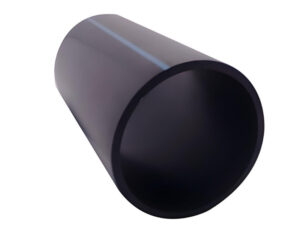
1200 mm HDPE Pipes: The Ultimate Guide to Large-Diameter Water & Industrial Pipelines
When infrastructure projects demand the movement of colossal volumes of water – think millions of liters per hour – standard pipe diameters simply do not suffice. Enter the 1200 mm High-Density Polyethylene (HDPE) pipe. At 1.2 meters in diameter, this is not a pipe for a residential connection or a small industrial line. This is a pipeline for cities, power plants, major irrigation schemes, and large-scale industrial complexes.
As a specialized 1200 mm HDPE pipes manufacturer, we have engineered, produced, and supplied these giants for some of India’s most demanding projects. In this comprehensive guide, we will explore the technical specifications, applications, manufacturing challenges, installation requirements, and cost considerations of 1200 mm HDPE pipes. We will also explain why HDPE outperforms traditional materials like concrete, mild steel, and ductile iron at this diameter.
What is a 1200 mm HDPE Pipe?
A 1200 mm HDPE pipe refers to a pipe with a nominal outside diameter (OD) of 1200 millimeters (1.2 meters). These pipes are produced by extrusion of high-density polyethylene resin, typically PE100 grade, which offers superior long-term strength and resistance to slow crack growth.
Key Technical Specifications
| Parameter | Typical Range |
|---|---|
| Outside diameter (OD) | 1200 mm ± 1% |
| Inside diameter (ID) | Varies by SDR (e.g., SDR 17: ~1060 mm ID) |
| Standard Dimension Ratio (SDR) | SDR 11, 13.6, 17, 21, 26, 33, 41 |
| Pressure rating (PN) | PN6 (SDR 26), PN10 (SDR 17), PN12.5 (SDR 13.6), PN16 (SDR 11) |
| Material grade | PE100 (ISO 4427) or PE80 (less common) |
| Standard length | 6 m, 10 m, 12 m (custom lengths possible) |
| Color | Black with blue stripes (water), solid black (sewage/gas), yellow (gas) |
| Wall thickness (example) | SDR 17: 70.6 mm; SDR 11: 109.1 mm |
| Weight per meter (approx.) | SDR 17: ~100 kg/m; SDR 11: ~150 kg/m |
| Manufacturing standards | ISO 4427, ASTM F714, IS 4984, IS 14333 |
Understanding SDR and Pressure Rating
SDR (Standard Dimension Ratio) = OD ÷ wall thickness. A lower SDR means a thicker wall and higher pressure rating.
| SDR | Wall Thickness (1200 mm OD) | PN Rating (PE100) | Typical Application |
|---|---|---|---|
| SDR 41 | 29.3 mm | PN 4 | Gravity sewers, stormwater |
| SDR 33 | 36.4 mm | PN 5 | Large diameter drainage |
| SDR 26 | 46.2 mm | PN 6 | Cooling water intakes |
| SDR 21 | 57.1 mm | PN 8 | Raw water transmission |
| SDR 17 | 70.6 mm | PN 10 | Municipal water mains |
| SDR 13.6 | 88.2 mm | PN 12.5 | Industrial process water |
| SDR 11 | 109.1 mm | PN 16 | High-pressure force mains |
Critical Applications of 1200 mm HDPE Pipes
1. Municipal Water Transmission Mains
Large cities require primary water feeders from treatment plants to storage reservoirs. A 1200 mm HDPE pipe at 1.5 m/s flow velocity can carry approximately 1,700 liters per second (over 6 million liters per hour). For a city of 1 million people, two such pipes are typically sufficient.
2. Raw Water Intake Lines
Power plants, refineries, and large industrial complexes draw cooling water from rivers, lakes, or the sea. 1200 mm HDPE pipes are ideal for:
-
Submerged intakes (resistant to salt water)
-
Floating intake lines (HDPE floats naturally when empty)
-
Buried intake pipelines
3. Major Irrigation Schemes
Under the Pradhan Mantri Krishi Sinchayee Yojana (PMKSY), large-diameter HDPE pipes are increasingly replacing open canals. Benefits include:
-
Zero water loss due to seepage (canals lose 30–40%)
-
No evaporation (buried pipes)
-
Ability to cross valleys and ridges without aqueducts
4. Sewage Force Mains
When treatment plants are located away from collection networks, sewage must be pumped. 1200 mm force mains are used for large catchment areas. HDPE’s resistance to hydrogen sulfide (H₂S) corrosion is unmatched.
5. Stormwater Drainage for Airports & Industrial Estates
Major airports (including Patna’s Jay Prakash Narayan Airport expansion) and large industrial estates use 1200 mm HDPE for stormwater to handle 100-year flood events.
6. Dredging & Slurry Lines
Mining and dredging operations require pipes that can withstand abrasive slurries. HDPE’s abrasion resistance is 4× better than steel for sand and slurry transport.
1200 mm HDPE vs. Traditional Materials
This is where HDPE truly shines. At 1.2 meters diameter, traditional materials become exponentially heavier and more difficult to install.
| Feature | 1200 mm HDPE (SDR 17) | 1200 mm Concrete (NP4) | 1200 mm Ductile Iron | 1200 mm Mild Steel |
|---|---|---|---|---|
| Weight per 6m pipe | ~600 kg | ~5,000 kg | ~3,600 kg | ~4,200 kg |
| Joint type | Butt fusion (leak-proof) | O-ring (potential leak) | Gasketed push-on | Welded (requires skilled welders) |
| Corrosion resistance | Excellent (immune) | Poor (rebar rusts) | Moderate (needs lining) | Poor (needs coating + CP) |
| Flexibility | High (survives settlement) | Rigid (cracks under settlement) | Moderate | Rigid |
| Hydraulic roughness (C-factor) | 150 (smooth) | 120–130 | 130–140 | 120 (rusts over time) |
| Installation crew size | 4–6 persons | 10–15 persons | 8–12 persons | 8–10 persons |
| 50-year life cycle cost | Lowest | High (repairs, leaks) | Medium-high | Very high (corrosion) |
| Ability to withstand water hammer | Excellent (ductile) | Poor (cracks) | Good | Fair |
Detailed Comparison: HDPE vs. Concrete
Concrete pipes at 1200 mm diameter are extremely heavy (5–6 tons per 2.5 m length). They require heavy cranes and careful handling. More importantly:
-
Concrete is porous – roots infiltrate joints
-
Concrete cracks under soil settlement
-
Concrete spalls (surface flakes off) in acidic or saline soils
-
Repairing a 1200 mm concrete pipe requires excavation of the entire section
HDPE solves all these problems – it is lightweight, flexible, corrosion-proof, and can be repaired via fusion welding of a patch.
Detailed Comparison: HDPE vs. Mild Steel
Mild steel pipes require:
-
External coating (bitumen, epoxy, or PE tape) – which can be damaged during installation
-
Cathodic protection (sacrificial anodes or impressed current) – ongoing maintenance cost
-
Internal lining (cement mortar or epoxy) to prevent rust contamination of water
-
Skilled welders for joints (X-ray inspection often required)
For a 10 km pipeline, the maintenance cost difference between HDPE and steel over 50 years is in the crores (tens of millions of rupees).
Manufacturing Challenges for 1200 mm HDPE Pipes
Producing 1.2-meter diameter HDPE pipes is not the same as making 110 mm pipes. Specialized equipment and quality control are essential.
1. Extrusion Line Requirements
-
Extruder: Minimum 250 kW motor, 150 mm screw diameter
-
Die head: Spiral or spider type for large diameters
-
Vacuum calibration tank: 8–10 meters long to cool and size the pipe
-
Haul-off: Caterpillar type with 12–16 tracks
-
Cooling bath: 20–30 meters total length
2. Raw Material Consumption
A 1200 mm SDR 17 pipe (70.6 mm wall thickness) consumes approximately 100 kg of HDPE resin per linear meter. For a 1 km pipeline: 100 metric tons of resin.
3. Quality Control Challenges
-
Ovality: Large pipes tend to go out-of-round during cooling. We use internal air pressure and external vacuum calibration to maintain <3% ovality.
-
Wall thickness concentricity: Ultrasonic sensors continuously scan the circumference.
-
Internal surface finish: Any roughness affects fiber blowing (for duct applications) or flow efficiency.
4. Common Manufacturing Defects to Avoid
| Defect | Cause | Prevention |
|---|---|---|
| Ovality >5% | Uneven cooling | Ensure cooling bath water flows uniformly |
| Thick/thin spots | Die misalignment | Regular die centering checks |
| Melt fracture (rough surface) | Excessive extrusion speed | Reduce line speed; check melt temperature |
| Black specks (burnt resin) | Degradation in extruder | Clean extruder; lower temperature profile |
| Poor fusion bead formation (for butt fusion) | Incorrect facing/cooling time | Train operators; use fusion log sheets |
Installation Best Practices for 1200 mm HDPE Pipes
Installing 1.2-meter diameter pipes requires planning, heavy equipment, and adherence to manufacturer guidelines.
Trench Design & Preparation
| Parameter | Requirement |
|---|---|
| Minimum trench width | OD + 600 mm (1.8 m for 1200 mm pipe) |
| Standard trench width | OD + 1,000 mm (2.2 m) for working space |
| Depth to top of pipe | Minimum 1,000 mm below road surface |
| Bedding thickness | 200 mm of compacted sand or fine gravel (no stones >10 mm) |
| Bedding material | Coarse sand (Zone II or III), maximum particle size 10 mm |
Handling & Lifting
-
NEVER use chains – they gouge HDPE. Use nylon or polyester slings (minimum 5 tons capacity).
-
Lifting points: Two slings for a 6 m pipe, three slings for a 12 m pipe.
-
Unloading: Use forklifts with padded forks or cranes with spreader beams.
Butt Fusion for 1200 mm Pipes
Butt fusion is the only reliable joining method for 1200 mm HDPE. Electrofusion fittings at this size are extremely expensive and rarely used.
Equipment required:
-
Hydraulic butt fusion machine with minimum 10–15 ton pull force
-
Facer (planer) with 1200 mm capacity
-
Heater plate (temperature controlled to 205–215°C)
-
Clamping assemblies for large diameters
Fusion parameters (typical for PE100, SDR 17):
| Parameter | Value |
|---|---|
| Heater plate temperature | 210°C ± 5°C |
| Bead-up pressure (drag) | 0.15–0.20 N/mm² |
| Bead-up soak time | 60–90 seconds |
| Fusion pressure (heat soak) | 0.01–0.05 N/mm² |
| Heating time | 15–25 minutes (depending on wall thickness) |
| Changeover time (heater removal to joining) | <60 seconds |
| Cooling time under pressure | 45–90 minutes |
| Total cycle time per joint | 2–3 hours |
Critical quality checks after fusion:
-
Bead size must be uniform around circumference (±20%)
-
Bead height should be approximately 30% of wall thickness
-
No voids, discoloration, or cold cracks
Lowering into Trench
For 1200 mm pipes, do not drop or roll the pipe into the trench. Use:
-
Side boom (pipelayer) for large projects
-
Multiple slings with equal-length legs
-
Guide ropes to control swing
Backfilling
| Layer | Material | Thickness | Compaction |
|---|---|---|---|
| 1 (bedding) | Sand | 200 mm | Hand or light mechanical |
| 2 (pipe surround) | Sand | 300 mm above pipe | Hand-tamped |
| 3 (warning) | Sand + detectable tape | 150 mm | Light mechanical |
| 4 (primary backfill) | Native soil (no rocks >50 mm) | To surface | Mechanical, avoid direct pipe contact |
NEVER use vibratory rollers directly above the pipe. Maintain at least 500 mm cover before vibratory compaction.
Hydrostatic Testing of 1200 mm HDPE Pipelines
Before commissioning, every HDPE pipeline must be pressure tested.
Testing Protocol
| Parameter | Requirement |
|---|---|
| Test medium | Clean water (not air – air is compressible and dangerous) |
| Test pressure | 1.5 × maximum operating pressure (e.g., 15 bar for PN10 pipe) |
| Test duration | Minimum 4 hours for pipelines <5 km; 24 hours for longer pipelines |
| Pressure gauge accuracy | ±1% of full scale |
| Temperature compensation | Correct for water temperature changes during test |
Acceptance Criteria
-
No visible leakage at joints or fittings
-
Pressure drop <2% of test pressure over 4 hours (excluding temperature effects)
Safety Warning for 1200 mm Testing
The stored energy in a 1.2-meter pipe at 15 bar is enormous. A failure can be catastrophic. Always:
-
Use slow pressurization (0.5 bar/minute)
-
Keep personnel away during test (minimum 100 m exclusion zone)
-
Use pressure relief valves
Cost Considerations for 1200 mm HDPE Pipes
Indicative Pricing (Ex-factory, Indian Rupees)
| SDR | PN Rating | Approximate Price per Meter (₹) | Price per 12m Pipe (₹) |
|---|---|---|---|
| SDR 41 (29.3 mm wall) | PN 4 | ₹8,000 – ₹10,000 | ₹96,000 – ₹1,20,000 |
| SDR 33 (36.4 mm wall) | PN 5 | ₹10,000 – ₹12,000 | ₹1,20,000 – ₹1,44,000 |
| SDR 26 (46.2 mm wall) | PN 6 | ₹12,000 – ₹15,000 | ₹1,44,000 – ₹1,80,000 |
| SDR 21 (57.1 mm wall) | PN 8 | ₹15,000 – ₹18,000 | ₹1,80,000 – ₹2,16,000 |
| SDR 17 (70.6 mm wall) | PN 10 | ₹18,000 – ₹22,000 | ₹2,16,000 – ₹2,64,000 |
| SDR 13.6 (88.2 mm wall) | PN 12.5 | ₹22,000 – ₹28,000 | ₹2,64,000 – ₹3,36,000 |
| SDR 11 (109.1 mm wall) | PN 16 | ₹28,000 – ₹35,000 | ₹3,36,000 – ₹4,20,000 |
Prices are indicative and subject to resin cost volatility (linked to crude oil). GST (18%) extra.
Freight Considerations for 1200 mm Pipes
A 12 m long, 1200 mm diameter pipe requires:
-
Low-bed trailer (normal flatbed is too high for 1.2 m pipe height)
-
Overhang permits for lengths >12 m
-
Multiple pipes per truck: typically 3–5 pipes (depending on weight)
Freight cost for a full truckload (500 km distance): ₹50,000 – ₹1,00,000. Cost per meter: ₹100 – ₹200.
Life Cycle Cost Comparison (50 years, 5 km pipeline)
| Pipe Material | Initial Cost (₹) | Installation (₹) | Maintenance (₹/year) | 50-Year Total (₹) |
|---|---|---|---|---|
| HDPE (PN10) | 1.0 Cr | 0.5 Cr | 0.05 Cr (minor repairs) | 3.5 Cr |
| DI (Ductile Iron) | 1.8 Cr | 0.8 Cr | 0.15 Cr (corrosion protection) | 8.1 Cr |
| MS (Mild Steel) | 1.6 Cr | 0.9 Cr | 0.20 Cr (recoating, CP) | 9.5 Cr |
| Concrete (RCC) | 1.2 Cr | 1.0 Cr | 0.25 Cr (leak repairs) | 12.7 Cr |
HDPE is the clear winner for long-term cost of ownership.
Case Study: 1200 mm HDPE for Power Plant Cooling Water
Project: 2 × 500 MW thermal power plant, coastal location
Requirement: Raw water intake from sea (3 km from shore) + discharge line (2 km)
Diameter required: 1200 mm to handle 15,000 m³/hour of cooling water
Challenges: Saltwater corrosion, wave action at intake, sandy seabed
Solution Provided:
-
5 km of 1200 mm HDPE pipe, SDR 17 (PN10), PE100 grade
-
Intake section (1 km submerged) with concrete weight coating (negative buoyancy)
-
Onshore section (4 km buried) with standard HDPE
-
All joints butt-fused onshore, then towed into position for submerged section
Installation method (submerged section):
-
Pipes prefabricated into 500 m strings on shore
-
Towed by tugboats into position
-
Sunk by flooding and placed on pre-dredged seabed
Results:
-
Completed in 6 months (vs. 15 months estimated for steel with anti-corrosion coating)
-
No corrosion issues after 5 years of operation
-
Zero leakage at any fusion joint
-
Total cost: 40% less than mild steel option
Client feedback: “The flexibility of HDPE allowed us to adapt to seabed irregularities. Steel would have required expensive supports.”
Why Choose Us as Your 1200 mm HDPE Pipe Manufacturer?
1. Specialized Large-Diameter Production Line
We maintain a dedicated extrusion line for diameters >1000 mm, including 1200 mm dies for all SDRs from SDR 11 to SDR 41.
2. Raw Material Traceability
We use only virgin PE100 resin from approved sources (SABIC, Borealis, or equivalent). Batch certificates are provided for every production lot.
3. Comprehensive Quality Assurance
-
100% ultrasonic wall thickness scanning
-
Hydrostatic pressure testing of each batch
-
Melt Flow Index (MFI) and Oxidation Induction Time (OIT) tests
-
Third-party inspection available (up to client’s designated agency)
4. Pan-India Delivery & Site Support
-
Low-bed trailers arranged for all 1200 mm pipe movements
-
Onsite butt fusion training for your crew
-
Fusion machine rental (10–15 ton capacity)
-
Technical support during installation and testing
5. Proven Track Record
We have supplied 1200 mm HDPE pipes for:
-
Coastal power plant (5 km submerged intake)
-
Delhi NCR water supply (12 km transmission main)
-
Gujarat industrial corridor (8 km raw water line)
-
Kolkata stormwater drainage (6 km)
Frequently Asked Questions (FAQ)
Q1: Can 1200 mm HDPE pipes be used for gas transmission?
Yes, but with additional requirements: yellow color, specified MRS (minimum required strength) for gas, and compliance with ISO 4437. Consult us for gas-grade pipes.
Q2: How long does it take to manufacture a 1200 mm pipe order?
For a 1 km order (approx. 84 pipes of 12 m length), manufacturing lead time is 10–15 working days, assuming die is available.
Q3: Do you provide fittings (bends, tees, reducers) for 1200 mm?
Yes. We fabricate fittings from the same pipe material via heat bending or extrusion welding. Lead time for fittings is additional 5–7 days.
Q4: Can 1200 mm HDPE be installed by Horizontal Directional Drilling (HDD)?
Yes, but only with SDR 11 (thickest wall) and special pull-resistant compound. Standard SDR 17 may collapse under HDD pull forces. Consult us for HDD-grade pipes.
Q5: What is the expected service life of 1200 mm HDPE?
For PE100 material under continuous pressure (PN rating), design life is 50 years. In gravity (non-pressure) applications, 100+ years is typical.
Q6: How do I repair a damaged 1200 mm HDPE pipe?
Two methods:
-
Small damage (<20 mm): Electrofusion patch
-
Large damage: Cut out section, butt fuse new piece with two couplings
Always depressurize and drain before repair.
Conclusion
The 1200 mm HDPE pipe is an engineering marvel that enables large-scale water supply, industrial cooling, irrigation, and drainage projects that would otherwise be impractical or unaffordable. Its combination of lightweight construction (relative to concrete/steel), complete corrosion resistance, leak-proof fusion joints, and 50+ year service life makes it the material of choice for forward-thinking engineers and project owners.
As a specialized 1200 mm HDPE pipes manufacturer, we have the extrusion capacity, quality systems, and field support experience to deliver these giants reliably, on time, and within budget. Whether your project is a municipal water main, a power plant intake, or a major irrigation scheme, we are ready to partner with you.
Ready to specify 1200 mm HDPE for your next large-scale project? Contact our engineering team for:
-
Technical datasheets and fusion parameter tables
-
A site-specific quotation (including freight to your location)
-
A reference list of similar projects
-
A visit to our manufacturing facility to witness 1200 mm pipe production
Call or email us today – let’s move water, efficiently and affordably, for the next 50 years.
TEC (Telecommunications Engineering Center) and its certification wing TSEC provide the benchmark for telecom infrastructure quality in India. Berlia’s PLB ducts comply with crucial specifications including TEC/DOT/GR/TX/CDS-008/03/MAR-11 and DOT Specification GR/CDS-08/02 Nov. 2004 amendments
Key performance characteristics of TEC-approved Berlia ducts include:
-
Environment Stress Crack Resistance (ESCR): Ensures long-term durability under environmental stresses
-
Impact Resistance: Protects against installation and external damage
-
Crush Resistance: Maintains integrity under soil and traffic loads
-
Low Coefficient of Friction: Enables smooth cable installation
-
High UV Protection: Prevents degradation during storage and installation
-
High Temperature Resistance: Suitable for diverse climatic conditions
Standard Sizes for Every Application
Berlia manufactures PLB ducts in various sizes to suit different telecom deployment requirements:
32/26 mm (OD/ID) – Ideal for FTTH (Fiber to the Home) deployments, this size is perfect for last-mile connectivity and residential network rollouts.
40/33 mm – The most widely used standard diameter for general telecom applications, offering a balanced solution for various network requirements.
50/42 mm – Designed for heavy-duty main trunk routes and multi-cable pulls, this larger diameter accommodates higher cable counts and is preferred for backbone network infrastructure
Color Coding and Application Sectors
Comprehensive Support for National Infrastructure
Berlia Pipes has earned the trust of prestigious public sector clients, including DRDO, BHEL, PGCIL, Indian Railways, and the Airport Authority of India. The company’s product portfolio extends beyond PLB ducts to include:
Installation Flexibility and Jointing Solutions
Berlia Pipes maintains BIS, ISO, and ASTM certifications, ensuring products meet global standards. The company’s commitment to innovation is evident in its specialized offerings like fire-resistant and anti-rodent ducts, which address specific industry challenges in sectors such as oil and gas, telecommunications, and power distribution.
With a vision to become one of India’s top HDPE pipe manufacturers, Berlia is strategically planning to scale its production capabilities to manufacture pipes up to 2,500 mm (2.5 meters) in diameter. This ambitious goal reflects the company’s dedication to supporting India’s expanding infrastructure needs
Partner with Berlia for Your Telecom Projects
Whether you’re involved in BharatNet Phase II/III rollouts, BSNL network expansions, RailTel projects, or NHAI highway duct installations, Berlia Pipes offers the reliability, quality, and technical expertise you need. With decades of experience, TEC/TSEC compliance, and a commitment to innovation, Berlia remains your trusted partner for PLB HDPE duct solutions.
The Gold Standard of Underground Optical Fibre Protection: How Berlia PLB HDPE Ducts Comply with TEC/GR/FA/CDS-008/04/AUG-19
When you’re laying optical fibre cable underground, the duct you choose is the difference between a network that performs flawlessly for 50 years and one that fails under pressure, moisture, or friction. In India, the benchmark for this critical infrastructure component is set by the Telecommunication Engineering Centre (TEC) under the Department of Telecommunications, Government of India.
The specification TEC/GR/FA/CDS-008/04/AUG-19 — Generic Requirements for Permanently Lubricated HDPE Telecom Ducts for Use as Underground Optical Fibre Cable Conduits — is the definitive document that governs the design, material, testing, and performance of PLB HDPE ducts. At Berlia, we manufacture ducts that don’t just meet these requirements — we embody every clause, table, and annexure of this standard.
This blog walks you through the TEC GR’s technical requirements and demonstrates how Berlia’s PLB HDPE ducts comply with each one, giving you complete confidence in your underground optical fibre deployment.
1. Product Description: Two-Layer Co-Extruded Construction
The TEC GR mandates that a PLB HDPE duct consists of two concentric layers:
-
Outer Layer: High Density Polyethylene (HDPE)
-
Inner Layer: A solid, permanently lubricated polymeric material co-extruded with the outer layer
The inner lubricant layer must be:
-
A solid layer of uniform thickness
-
White in colour and clearly visible in cross-section
-
Continuous throughout the duct’s life
-
Formulated to provide a permanent low-friction boundary layer between the duct’s inner surface and the optical fibre cable
Berlia Compliance: Our PLB HDPE ducts are manufactured using advanced co-extrusion technology that bonds the inner lubricant layer integrally with the HDPE outer layer. The white inner layer is uniformly thick, visually distinct, and permanently embedded — it will not peel, flake, or migrate during storage, installation, or decades of service.
2. Raw Material Requirements
2.1 Outer Layer HDPE Resin
The TEC GR specifies that the base HDPE resin must conform to IS: 7328 and meet the following Table-1 requirements:
| Property | TEC Requirement | Berlia Compliance |
|---|---|---|
| Density | 0.940–0.958 g/cc at 27°C | ✅ Compliant |
| Melt Flow Rate (MFR) | 0.2–1.1 g/10 min at 190°C & 5 kg | ✅ Compliant |
| Tensile Strength at Yield | ≥ 20 N/mm² (ASTM D 638, Type-IV) | ✅ Compliant |
| Elongation at Break | > 600% (ASTM D 638, Type-IV) | ✅ Compliant |
| Flexural Modulus at 1% strain | ≥ 690 N/mm² (ASTM D 790) | ✅ Compliant |
| Hardness, Shore-D | 60–65 units (ASTM D 2240) | ✅ Compliant |
| Heat Deflection Temperature | ≥ 65°C at 45 g/mm² (ASTM D 648) | ✅ Compliant |
| Environmental Stress Crack Resistance | 96 hrs with 10% Igepal CO-630 at 50°C, no cracks (ASTM D 1693) | ✅ Compliant |
| Weathering (UV) | After 720 hrs exposure, tensile strength variation ≤ 20% | ✅ Compliant |
| OIT (Aluminium Pan) | ≥ 30 minutes (Annexure-I) | ✅ Compliant |
| UV Stabiliser Content | Hindered Amine Light Stabiliser ≥ 0.15% | ✅ Compliant |
2.2 Inner Lubricant Layer
-
Density: 0.940–0.958 g/cc at 27°C
-
Non-toxic, safe handling
-
White in colour, clearly visible in cross-section
-
Continuous, integral with HDPE, will not come out during storage or usage
Berlia Compliance: Our inner lubricant layer is a specially formulated polymeric compound that meets the density specification and is co-extruded to form a permanent, inseparable bond with the HDPE outer layer. It remains stable throughout the duct’s 50+ year design life.
2.3 Raw Material Handling & Additives
-
Antioxidants must be physiologically harmless
-
No additives that impair long-term physical/chemical properties
-
Single-pass rework material ≤ 10%
-
Moisture content < 0.1% before extrusion
-
UV stabilisers for minimum 8 months open storage protection
-
Service life > 50 years including permanent lubricant
-
Ash content of colour master batch ≤ 12%
Berlia Compliance: We source only TEC/CACT-approved HDPE resins, maintain strict moisture control with inline dryers, use food-grade antioxidants, and limit rework to well below 10%. Our colour master batches meet the ash content requirement, and our formulations are engineered for a 50-year service life.
3. Completed Duct Requirements
3.1 Visual Inspection
Ducts must be free from blisters, shrink holes, flaking, chips, scratches, roughness, breaks, and other defects. They must be smooth, clean, round, and cut square with the axis.
Berlia Compliance: Every Berlia duct undergoes 100% inline visual inspection and post-production quality checks. Our extrusion lines are equipped with laser diameter gauges and surface defect detection systems.
3.2 Colour Options
-
Available in 8 colours: Green, Orange, Blue, Yellow, Brown, Violet, Grey, Red
-
Uniform colour throughout
-
Four equispaced continuous white longitudinal stripes (min. 3 mm width)
-
Stripes co-extruded with the duct
-
Stripe material same as base HDPE compound
Berlia Compliance: We offer all eight standard colours with co-extruded white stripes that are uniform, continuous, and meet the 3 mm minimum width requirement. Custom colour matching is also available.
3.3 Dimensions
| Nominal Size | Outside Diameter Tolerance | Wall Thickness | Inner Layer Thickness | Standard Length | Max OFC Diameter (Blowing) |
|---|---|---|---|---|---|
| 32/26 mm | +0.3/-0.0 mm | 3.0 ± 0.2 mm | 0.24–0.36 mm | 1000 ± 100 m | 12 mm |
| 40/33 mm | +0.4/-0.0 mm | 3.5 ± 0.2 mm | 0.28–0.42 mm | 1000 ± 100 m | 16 mm |
| 50/42 mm | +0.5/-0.0 mm | 4.0 ± 0.3 mm | 0.32–0.48 mm | 1000 ± 100 m | 21 mm |
| 63/50 mm | +0.6/-0.0 mm | 6.5 ± 0.40 mm | 0.36–0.54 mm | 500 ± 50 m | 25 mm (144 fibres) |
| 110/80 mm | +1.0/-0.0 mm | 15.0 ± 0.60 mm | 0.56–0.84 mm | 200 ± 20 m | 40 mm (576 fibres) |
Berlia Compliance: We manufacture all five standard sizes with precise dimensional control. Our inline ultrasonic thickness gauges and laser diameter measurement systems ensure every metre meets the tolerance requirements.
3.4 Pre-Installed Rope
When ordered, ducts are supplied with pre-installed polypropylene rope:
-
32/26, 40/33, 50/42 mm: 4 mm dia, min. 2% slackness
-
63/50, 110/80 mm: 6 mm dia
Berlia Compliance: We offer optional pre-installed ropes as per IS 5175, with the correct diameter and slackness for each duct size.
3.5 Tensile Strength & Elongation
-
Tensile strength at yield: ≥ 20 N/mm²
-
Elongation: ≥ 500%
-
Tested at 50 mm/min per ASTM F 2160 (Type IV specimens)
Berlia Compliance: Our ducts consistently exceed these values. We conduct tensile testing on every production batch.
3.6 Longitudinal Reversion
-
200 mm sample at 110 ± 2°C for 60 minutes
-
Dimensional change ≤ 3% in longitudinal direction
Berlia Compliance: Our optimized extrusion and cooling processes ensure minimal residual stress, resulting in reversion well below 3%.
3.7 Environmental Stress Crack Resistance
-
10% Igepal CO-630 at 50 ± 1°C for 96 hours
-
No failure/cracks
Berlia Compliance: Our HDPE compounds are selected for their superior ESCR performance. We routinely pass this test with zero failures.
3.8 Impact Strength
-
150 mm sample on 120° block
-
10 kg striker, 13 mm hemispherical nose, 1.5 m free fall
-
No crack or split
Berlia Compliance: Our ducts pass impact testing at 0°C as per IS: 12235 (Part-9) without cracking or splitting.
3.9 Crush Resistance
-
150 ± 2 mm sample, 50 kg dead load for 1 minute
-
Deflection with load: ≤ 10%
-
After 5 min recovery: ≤ 2%
Berlia Compliance: Our wall thickness and material formulation ensure excellent crush resistance, with deflection values well within limits.
3.10 Mandrel Test
-
150 mm mandrel, 3 mm less than ID
-
Must pass freely through 5 m duct bent to 5 m radius
Berlia Compliance: Our ducts are flexible yet strong, passing the mandrel test with ease.
3.11 Ovality Test
-
Difference between max and min OD at same cross-section
-
Measured 300 mm from end
Berlia Compliance: Our precision extrusion and cooling ensure ovality well within acceptable limits.
3.12 Coil Set
-
50 m length laid on ground must be straight
-
No bends, kinks, or deformation (except 5 m from each end)
Berlia Compliance: Our advanced winding and stress-relief processes produce zero coil set. The duct lays straight into the trench without snaking or waving.
3.13 Oxidation Induction Test
-
OIT ≥ 30 minutes as per Annexure-1
Berlia Compliance: Our compounds are stabilized with high-performance antioxidants, consistently achieving OIT values above 30 minutes.
3.14 Hydraulic Characteristics
| Test | Temp | Duration | Induced Stress |
|---|---|---|---|
| Type Test | 80°C | 165 hrs | 3.5 MPa |
| Acceptance Test | 80°C | 48 hrs | 3.8 MPa |
-
No localized swelling, leakage, or burst
Berlia Compliance: Our ducts pass internal pressure creep rupture testing as per IS: 4984.
3.15 Internal Coefficient of Friction
-
Nylon Jacketed unarmoured OFC: ICF ≤ 0.06
-
HDPE Jacketed unarmoured OFC: ICF ≤ 0.20
Berlia Compliance: Our permanently lubricated inner layer delivers ICF values that meet or exceed these requirements, ensuring smooth, long-distance cable blowing.
3.16 Identification Markings
-
Indelible ink markings every metre
-
Service Provider/Purchaser, Telephone Emblem, Manufacturer’s name, Duct name & size
-
Composite number: PXXSSSS DDMMYY
-
Sequential marking every metre
Berlia Compliance: Every Berlia duct is marked with all required information using high-durability ink that withstands storage and installation.
3.17 Optical Fibre Cable Blowing Test
-
1 km for 32/26, 40/33, 50/42 mm; 500 m for 63/50 mm
-
Bends in horizontal and vertical planes, raise in middle
-
Two couplings included
-
Blow in ≤ 35 minutes (for 1 km), no visible damage
-
Blow out, inspect, blow in again
Berlia Compliance: Our ducts are tested with actual OFC blowing to verify installation performance. The permanent lubricant layer ensures fast, damage-free cable installation.
3.18 Density
-
0.940–0.958 g/cc at 27°C
-
Difference from raw material ≤ 0.003 g/cc
Berlia Compliance: Our process control ensures density consistency between raw material and finished duct.
3.19 Melt Flow Rate
-
Change in MFR due to processing ≤ 30%
Berlia Compliance: Our extrusion parameters are optimized to minimize polymer degradation, keeping MFR change well below 30%.
3.20 Ash Content
-
≤ 0.3%
Berlia Compliance: Our formulations use high-purity additives, keeping ash content minimal.
3.21 Colour Fading Test
-
ASTM D 1712
-
No discolouration
Berlia Compliance: Our UV-stabilized colour master batches resist fading even after prolonged exposure.
3.22 UV Stabiliser Test
-
UV-B lamps, 0.63 W/m²/nm
-
Cycle: 4 hrs UV at 60°C + 4 hrs condensation at 50°C
-
Total: 720 hrs
-
Tensile strength variation ≤ 20%
Berlia Compliance: Our ducts are formulated with Hindered Amine Light Stabilisers (HALS) at ≥ 0.15% and pass the 720-hour UV aging test with minimal tensile loss.
4. PLB HDPE Duct Accessories
4.1 Plastic Couplers (Clause 5.1a)
-
Push-fit or Compression type
-
Air/water tight joint
-
Air pressure test: 15 kg/cm² for 2 hours, no leakage
-
Material: Injection moulding grade HDPE or Polypropylene
-
Smooth internal bore (no step formation)
-
Manufacturer’s name engraved, removable caps
Berlia Compliance: We supply precision-moulded couplers that provide airtight, watertight joints. Each coupler is tested to 15 kg/cm² for 2 hours.
4.2 End Plug
-
Seals empty duct ends
-
Prevents dirt, water, moisture, insects/rodents
-
Air tightness: 1 bar for 30 minutes
Berlia Compliance: Our end plugs are manufactured from high-grade rubber/plastic and pass the 1-bar, 30-minute airtightness test.
4.3 Cable Sealing Plug
-
Seals duct ends after cable installation
-
Accommodates standard OFC sizes with tolerance variations
-
Air tightness: 1 bar for 30 minutes
Berlia Compliance: Our cable sealing plugs are designed for a range of cable diameters and pass the required airtightness test.
4.4 End Cap
-
Hard rubber/suitable plastic
-
Fitted on both ends of duct coil
-
Prevents dust, mud, rainwater during transit/storage
Berlia Compliance: Every Berlia duct coil is fitted with durable end caps.
4.5 Pulling Force for Coupler Joints
| Duct Size | Minimum Pulling Force |
|---|---|
| 110/80 mm | 800 kgf |
| 63/50 mm | 550 kgf |
| 50/42 mm | 450 kgf |
| 40/33 mm | 320 kgf |
| 32/26 mm | 250 kgf |
-
Test: 15 minutes on Universal Tensile Testing Machine
Berlia Compliance: Our coupler joints exceed these pulling force requirements, ensuring joint integrity during installation.
4.6 Ageing Test for Accessories
-
Install accessory on duct
-
Test tightness (pass)
-
Age in air circulating oven at 70 ± 2°C for 168 hours
-
Cool to room temperature
-
Test tightness again (pass)
Berlia Compliance: Our accessories pass the 168-hour aging test and maintain airtightness.
4.7 Additional Tools
-
Rotary Duct Cutter
-
C-Spanner
-
Chamfering Tool
-
Blowing Equipment (Min 8 bar, Max 12 bar, 10 m³/min)
Berlia Compliance: We provide recommendations and specifications for all required installation tools.
5. Type Approval & Acceptance Testing
5.1 Type Approval Sampling
-
Single colour/size: 5 ducts offered
-
Multi colour/size: Min 2 ducts per colour per size, min 5 total
-
UV ageing: 1 duct per size per colour
-
Blowing test: 2 ducts per size
-
All other tests: All 5 ducts
Berlia Compliance: We provide all required samples for type approval and have successfully obtained type approval certificates for our PLB HDPE ducts.
5.2 Acceptance Tests
Visual & Dimensional :
-
Lot-based sampling with first and second sample sizes
-
Acceptance/rejection criteria as per table
Acceptance Tests:
-
Tensile Strength & Elongation
-
Longitudinal Reversion
-
Environmental Stress Crack Resistance
-
Impact Strength
-
Crush Resistance
-
Oxidation Induction Test
-
Hydraulic Characteristics
-
Internal Coefficient of Friction
Berlia Compliance: We have a fully equipped in-house testing laboratory and also utilize TEC-designated CAB/accredited laboratories for type testing. Every production lot is tested as per the sampling plan.
6. Storage, Packing & Delivery
-
Stored to prevent performance degradation
-
Coils of suitable size for safe delivery
-
Minimum inner bending diameter: 18 × outer diameter
Berlia Compliance: Our ducts are coiled on sturdy drums/spools with the correct minimum bending diameter and delivered in protective packaging.
7. Quality Requirements of Manufacturing System
-
ISO 9001:2015 (or latest) accreditation
-
Quality plan describing quality assurance system
Berlia Compliance: Berlia is an ISO 9001:2015 certified manufacturer. Our quality management system covers every stage from raw material sourcing to final dispatch. We maintain detailed quality plans and records for full traceability.
8. Test Methods
Oxidation Induction Test (OIT)
-
Sample conditioned at 68 ± 1°C for 8 hours
-
Cooled at room temperature for 16+ hours
-
DSC testing with nitrogen purge, then oxygen at 199 ± 1°C
-
Induction time ≥ 30 minutes
Berlia Compliance: We perform OIT testing using calibrated Differential Scanning Calorimeters as per the prescribed method.
Internal Coefficient of Friction (ICF)
-
450° wrap on 750 mm diameter fixture
-
25 kg tail weight
-
Extensometer at 500 mm/min
-
Formula: ICF = loge(T1/T2) / Q
Berlia Compliance: Our ICF testing confirms values ≤ 0.06 for nylon-jacketed OFC and ≤ 0.20 for HDPE-jacketed OFC.
9. Why Berlia?
| TEC Requirement | Berlia Compliance |
|---|---|
| Two-layer co-extruded construction | ✅ Advanced co-extrusion technology |
| 8 colour options with white stripes | ✅ All colours available |
| 5 standard sizes (32/26 to 110/80 mm) | ✅ Full range manufactured |
| 50-year service life | ✅ Engineered for 50+ years |
| Permanent lubricant layer | ✅ Integrally bonded, non-migrating |
| ICF ≤ 0.06 (nylon OFC) | ✅ Meets/exceeds |
| OIT ≥ 30 minutes | ✅ Consistently passes |
| UV stabilization ≥ 0.15% HALS | ✅ Compliant |
| ISO 9001:2015 | ✅ Certified |
| Type approval from TEC | ✅ Obtained |
10. Conclusion
The TEC/GR/FA/CDS-008/04/AUG-19 specification is not just a set of requirements — it’s a promise of quality, durability, and performance for India’s underground optical fibre infrastructure. At Berlia, we don’t just meet this standard; we exceed it at every clause.
From raw material selection to co-extrusion, from dimensional accuracy to friction performance, from UV stabilization to 50-year service life — every Berlia PLB HDPE duct is manufactured to comply with the highest technical standards.
When you choose Berlia, you choose:
-
Certified compliance with TEC/GR/FA/CDS-008/04/AUG-19
-
Proven performance in real-world optical fibre blowing installations
-
Peace of mind knowing your underground network is protected for decades
Contact Berlia today to discuss your PLB HDPE duct requirements and receive a detailed compliance certificate for your project.